
Dolby Atmos for music: is spatial audio the future of music production?

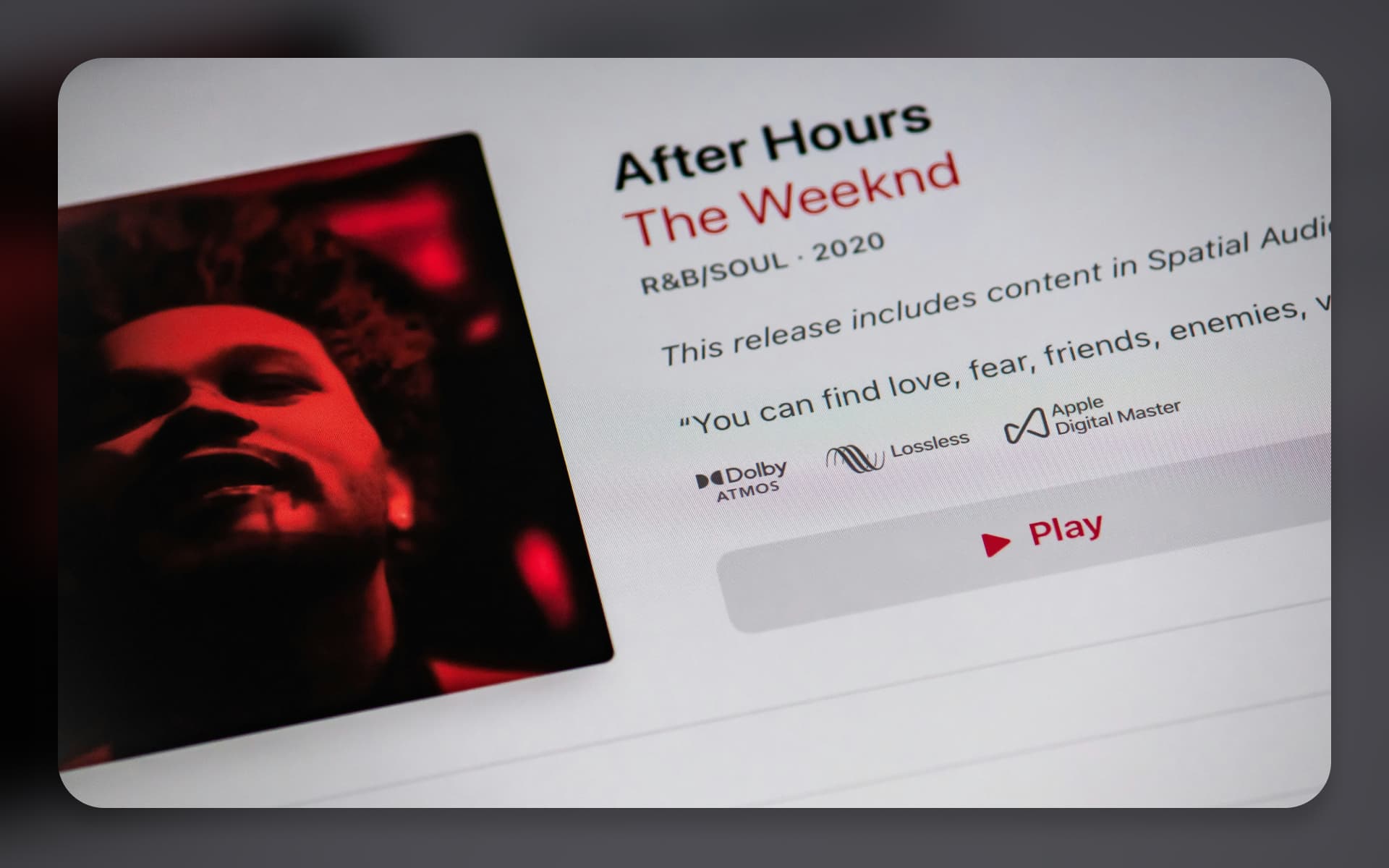
Spatial audio is no longer a novelty. It's becoming the new standard, and the artists who understand it now will have a significant advantage over those who don't.
Something is changing in the way we listen to music
If you've used Apple Music or Amazon Music recently and noticed that certain tracks sound different, more immersive, more three-dimensional, like the music is happening around you rather than coming from two fixed points, you've already experienced spatial audio. Specifically, you've experienced Dolby Atmos for music.
This isn't a gimmick. The technology has been used in cinema for decades, and its migration into music is one of the most significant shifts in how recorded music is experienced since the introduction of stereo. Apple Music streams over 100 million songs in Dolby Atmos. Amazon Music, Tidal, and other platforms have followed. The infrastructure is already there. The question for artists and producers is whether they're going to engage with it or ignore it.
What Dolby Atmos actually does
Traditional stereo music exists in two dimensions: left and right. Everything in a stereo mix is placed somewhere along that horizontal axis. It works well, and it's been the standard for recorded music for decades. But it's also inherently limited. A stereo mix can create the impression of width and depth, but it can't truly place sounds above or behind the listener.
Dolby Atmos works differently. Instead of mixing to channels, audio objects are placed in a three-dimensional space: left and right, yes, but also height and depth. When played back through a compatible system, whether that's a Dolby Atmos-enabled soundbar, a set of spatial audio headphones, or a properly configured speaker array, the music genuinely surrounds the listener.
Vocals can sit directly in front of you. Strings can sweep overhead. A piano can feel like it's slightly behind and to the right. The experience is fundamentally different from stereo, and for certain types of music, it's revelatory.
How streaming platforms are driving adoption
The shift toward spatial audio isn't being driven primarily by artists or labels. It's being driven by the platforms themselves, and that's important to understand.
Apple Music introduced lossless audio and Dolby Atmos support in 2021, and made it available at no extra cost to all subscribers. This was a significant move: it immediately put Dolby Atmos content in front of hundreds of millions of listeners without requiring them to do anything or pay anything extra.
Spotify has been developing its own spatial audio capabilities, with various tests and rollouts across different markets. As the world's largest streaming platform, Spotify's full adoption of spatial audio would represent a tipping point that makes Atmos mixes essentially mandatory for competitive releases.
The direction of travel is clear. Streaming platforms want spatial audio because it differentiates their product and improves the listening experience. Artists who have Atmos mixes ready will have content that platforms actively want to promote.
What this means for independent artists right now
Here's the practical reality for an independent artist in 2025: you don't need to mix everything in Dolby Atmos immediately, but you do need to understand what it is and start thinking about how it applies to your music.
For certain genres, particularly orchestral, ambient, jazz, and acoustic music, spatial audio is already transforming the listening experience in ways that listeners notice and respond to. For electronic music, hip-hop, and pop, the benefits are real but more subtle. For heavily distorted rock and metal, the jury is still somewhat out.
The key strategic consideration is this: if you're recording and producing music that you want to last, having an Atmos mix in addition to your stereo mix gives you a version of the record that is ready for where the industry is going, not just where it is now.
The technical reality of Atmos production
Creating a Dolby Atmos mix is more complex than creating a stereo mix, and it requires both the right tools and the right environment.
The technical requirements are specific. You need a DAW that supports Atmos, a properly configured monitoring setup with speakers positioned at multiple heights, and the expertise to make placement decisions in three dimensions rather than two. Getting those decisions wrong doesn't just make the Atmos mix sound bad. It can make the stereo fold-down, the version most people will still hear on standard devices, sound worse than a properly crafted stereo mix would have.
This is not a process to rush or to attempt without proper preparation. The quality of an Atmos mix is entirely dependent on the quality of the environment in which it's created and the expertise of the person creating it.
Why spatial audio changes the emotional experience of music
Beyond the technical discussion, there's something worth paying attention to at a purely experiential level. Music in Dolby Atmos can feel different emotionally, not just sonically.
When a vocal sits in the center of your head rather than in front of you, the intimacy of the performance changes. When strings sweep across a three-dimensional space rather than panning from left to right, the emotional impact of the arrangement is amplified. These aren't small differences. For listeners who have experienced well-crafted Atmos mixes, going back to stereo for the same track can feel like a step backward.
This emotional dimension is what makes spatial audio more than a technical upgrade. It's a new creative tool, and the artists who learn to use it intentionally will be able to create listening experiences that simply weren't possible before.
"The detail is not the detail. It makes the design." — Charles Eames
The same is true in music production. The spatial details that Atmos makes possible aren't footnotes to the music. They become part of the emotional experience itself.
Connecting great spatial audio with the right audience
Producing in Dolby Atmos gives you a competitive edge, but only if that music reaches the people who can appreciate it. Matchfy connects artists with the curators and industry professionals who are specifically seeking high-quality, forward-thinking music.
As spatial audio becomes more mainstream, curators on platforms like Apple Music are actively looking for Atmos content to feature. Being discoverable to those curators, through a platform that connects you directly with real industry professionals, puts your spatial audio investment to work.
Matchfy's network extends beyond playlist placement into sync licensing, artist development, and broader industry connections. For an artist who has invested in Atmos production, these connections represent the difference between having a great-sounding record and having a great-sounding record that people actually hear.
Your music deserves to be heard by the people who are looking for exactly what you're making. Join Matchfy and connect with the industry professionals who can amplify your work →
The bottom line
Dolby Atmos for music is not a passing trend. It's a fundamental shift in how music is produced, distributed, and experienced. The platforms are already there. The listeners are already there. The question is whether the artists are ready.
Understanding spatial audio now, and starting to engage with it on your terms, puts you ahead of the majority of independent artists who are still treating it as something to think about later.
Later has a way of becoming never. Start thinking about it now.