
From unknown to recognized: the step-by-step path to building a music career

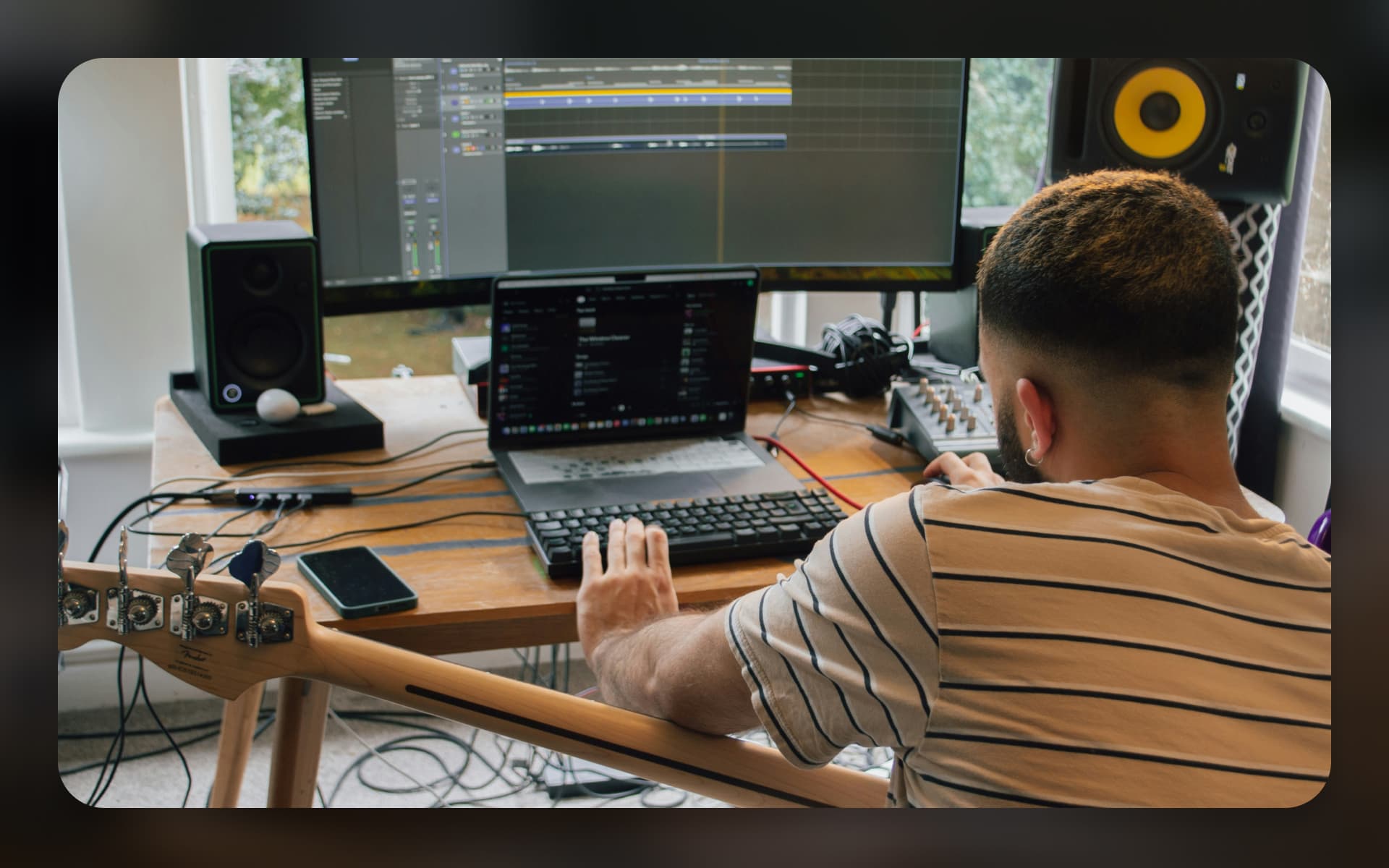
Nobody becomes a recognized artist overnight, regardless of what the highlight reels suggest. Here is the actual path, laid out clearly, for artists who are serious about building something that lasts.
The myth of the overnight success
Every few months, a new artist seems to appear from nowhere and suddenly be everywhere. A viral video, a playlist placement that explodes, a song that catches a cultural moment perfectly. From the outside, it looks instantaneous.
From the inside, it almost never is. Behind virtually every "overnight success" in music is years of development, dozens of unreleased projects, countless rejections, and a slow accumulation of skills, relationships, and audience that made the moment of breakthrough possible when it finally arrived.
Understanding this doesn't diminish the excitement of those breakthrough moments. It contextualizes them. And that context is enormously useful if you're at the beginning or the middle of a music career, trying to figure out what to actually do next.
Stage one: foundation
Every sustainable music career begins with the same thing, a foundation, and the foundation has three components that need to exist before anything else makes sense.
Craft development is the first. You need to be genuinely good at the core musical skill your career is built around, whether that's songwriting, production, performance, or some combination. "Genuinely good" doesn't mean perfect, and it doesn't mean the best. It means your work is at a level where it can hold attention and stand up to comparison with other music in your genre. This takes time, and the time it takes varies enormously between individuals. What it requires from everyone is consistent, deliberate practice and an honest assessment of where the gaps are.
Sound definition is the second component. Before you can build an audience, that audience needs to be able to understand what you're about. This doesn't mean you need a fully formed, unchanging artistic identity. It means your music should have enough coherence that someone who hears two of your songs back to back can tell they're by the same artist. Without this coherence, every release starts from zero because there's no thread connecting them.
Professional infrastructure is the third. This means having the basic professional setup that allows you to function as a working musician. A properly set up Spotify for Artists profile. A distributor. Accounts with your country's performing rights organization so you collect your royalties. A professional email address. A consistent presence on at least one social platform. These are the basics, and they should be in place before you start seriously promoting anything.
Stage two: building the first audience
Once the foundation is solid, the work of building an initial audience can begin. This stage is about identifying who your music is for and finding ways to reach those people consistently.
Identify your core listener. Not in a demographic sense, age, gender, location, though that data becomes useful later. In a taste sense: what else do they listen to? What other artists do they follow? What does their playlist look like? The clearer your picture of this person, the more targeted and effective every promotion decision you make will be.
Choose one or two platforms and commit. The temptation at this stage is to be everywhere simultaneously. Resist it. A strong, consistent presence on one platform is worth far more than a thin, irregular presence on five. Choose the platform where your target listener actually spends time, and build there first with enough depth that someone who discovers you has something to explore.
Release consistently. Consistency in releasing music serves multiple purposes. It trains the algorithm to treat you as an active artist and recommend your new music to people who've engaged with your old music. It gives your growing audience a reason to stay connected. And it develops your craft faster than anything else, because the feedback loop between release and listener response is the most honest teacher available.
Start pitching. At this stage, playlist pitching, whether to Spotify's editorial team through Spotify for Artists or to independent curators through platforms and direct outreach, becomes a genuine strategic priority. A playlist placement can introduce your music to thousands of people who have never heard of you and whose taste means they're likely to connect with what you're making. This is one of the highest-leverage activities available to an emerging artist, and it should be treated accordingly.
Stage three: building industry relationships
There's a transition point in every music career where the work shifts from building an audience to building an industry presence. These aren't mutually exclusive, they happen simultaneously, but the emphasis changes as your career develops.
Industry relationships open doors that audience size alone can't open. A music supervisor who knows your name will think of you when a placement opportunity arises. A curator who respects your work will prioritize your next submission. A manager who believes in your trajectory will open introductions that would take you years to build on your own.
Building these relationships requires proactivity and patience. You can't wait until you need something to start building the relationships that would provide it. The artist who reaches out to curators only when they have a release, to journalists only when they have news, to sync agents only when they need income, is building a reputation as someone who only shows up when they want something.
The artists who build strong industry networks show up consistently, engage genuinely, support others in the industry, and treat relationships as long-term investments rather than transactional exchanges. This orientation pays dividends over years, not weeks.
Stage four: creating leverage
At some point in a music career, if the foundation, the audience, and the industry relationships have been built with care, something shifts. Individual actions start to produce disproportionate results. A playlist placement leads to a sync inquiry. A sync placement leads to a management approach. A manager's introduction leads to a label conversation or a booking agent relationship.
This is leverage, and it's the product of accumulated trust, credibility, and visibility built over time. It can't be rushed, but it can be accelerated by making smart decisions at each earlier stage.
Leverage is also created by diversifying your revenue streams. An artist who relies entirely on streaming income is in a fragile position. An artist who earns from streaming, sync licensing, live performance, merchandise, and music licensing for content creators has multiple points of stability that reinforce each other.
Understanding which of these revenue streams are realistic at your current stage, and actively developing the ones that are, is part of the strategic thinking that characterizes successful artists at this stage.
Stage five: sustainability
The goal of all the preceding stages is not fame. Fame is a possible byproduct of a successful music career, but it's not the thing worth building toward. The goal is sustainability: a music career that generates enough income, creative satisfaction, and industry engagement to be maintained and grown over the long term.
Sustainability looks different for every artist. For some, it means a major label deal and mainstream commercial success. For most, it means a smaller but deeply engaged audience, multiple revenue streams, and the ability to keep making music without depending on a day job. Both are legitimate. Both require the same foundational work.
The artists who achieve sustainability are almost uniformly the ones who approached their career strategically from the beginning, who invested in relationships and craft with equal seriousness, who treated setbacks as data rather than verdicts, and who kept showing up consistently long after the initial enthusiasm had faded.
The role of the right platforms at the right stages
At every stage of the path described above, the platforms and tools you use determine how efficiently you move forward. A great artist using the wrong tools for their current stage wastes time and energy that could be accelerating their growth.
Matchfy is built for the stages where industry connection becomes the priority. Once your music is at the level it needs to be and you have a clear sense of who you are as an artist, Matchfy gives you direct access to the curators, sync professionals, and industry contacts who can create the kind of leverage that accelerates everything else.
The platform is transparent, data-driven, and built around real relationships rather than automated services. It's the tool that connects the work you've done in building your craft and your audience with the industry professionals who can take that work to the next level.
Whether you're pitching to playlists for the first time, exploring sync opportunities, or building the kind of industry relationships that open doors over years rather than weeks, Matchfy provides the infrastructure to do it efficiently and effectively.
Every stage of a music career is more efficient with the right connections. Start building them now. Join Matchfy and accelerate the path from unknown to recognized →
The bottom line
The path from unknown to recognized is not a mystery. It's a sequence of stages, each building on the previous one, each requiring a specific combination of craft, strategy, and relationship-building. The artists who understand this and execute it with consistency and patience are the ones who eventually get where they're trying to go.
There are no shortcuts. But there is a path. And the first step on it is deciding to take it seriously.