
Home studio vs professional studio: what's the real difference for your music career?

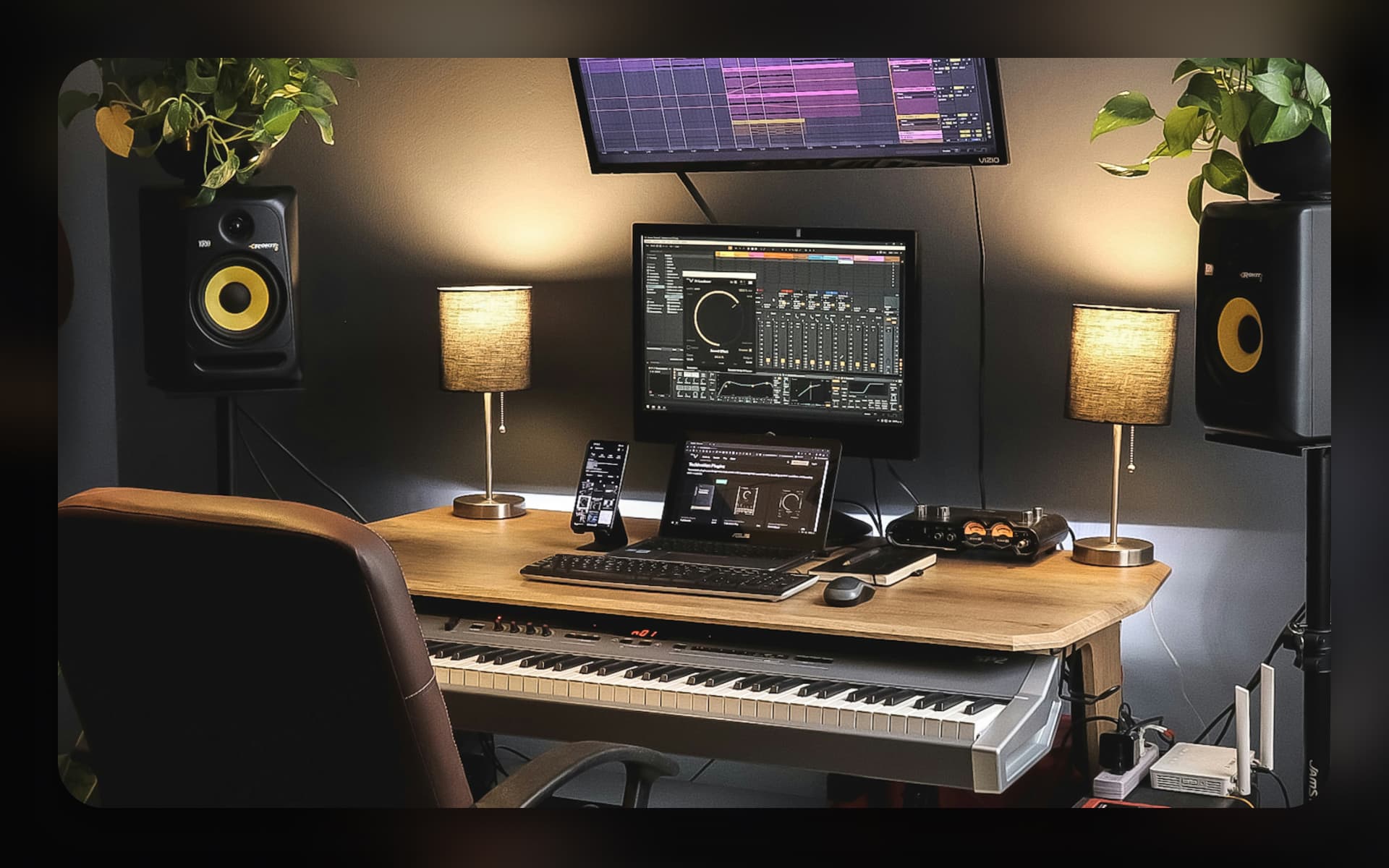
The debate between recording at home and going to a professional studio isn't just about sound quality. It's about what stage of your career you're in and what you're trying to achieve.
The home studio revolution changed everything, but not completely
Over the last fifteen years, the cost of music production technology has dropped dramatically. A setup that would have cost tens of thousands of dollars in the nineties can now be replicated for a few hundred. Interfaces, DAWs, plugins, condenser microphones: the tools are accessible, and the barrier to entry has never been lower.
This democratization is genuinely exciting. Artists can experiment freely, record at three in the morning, iterate on ideas without watching studio hours tick by. The home studio has given independent artists a level of creative freedom that simply didn't exist before.
But accessibility and professional quality are not the same thing. And confusing the two is one of the most common and costly mistakes an emerging artist can make.
What a home studio does well
A home studio is an exceptional tool for certain things, and understanding those things helps you use it correctly.
Idea development and pre-production are where the home studio shines. Capturing a melody before it disappears, building a rough arrangement, experimenting with sounds and structures, developing the song before it goes anywhere near a final recording: all of this is perfectly suited to a home setup.
Workflow and iteration are also genuine strengths. When you're not paying by the hour, you can afford to try ten different approaches to a verse, sleep on it, come back the next day, and try ten more. That creative freedom is valuable and shouldn't be underestimated.
Electronic and produced genres can sometimes achieve professional results in a home studio, particularly when the music doesn't rely on acoustic instruments or live room ambience. A well-produced electronic track built entirely in the box can sound competitive if the producer knows what they're doing.
Where the home studio falls short
The limitations of a home studio aren't primarily about the gear. They're about acoustics, monitoring, and expertise.
A room that hasn't been properly treated acoustically gives you inaccurate feedback about what your mix actually sounds like. You might spend hours perfecting a bass balance that sounds completely different on any other speaker system. This is one of the most common reasons home-produced tracks don't translate well across platforms and devices.
Monitoring is equally critical. Professional studios invest heavily in their monitoring systems because accurate playback is the foundation of every decision a mixing engineer makes. Without accurate monitoring, every choice you make while mixing is based on compromised information.
Then there's the expertise gap. Mixing and mastering are technical disciplines that take years to develop. Many artists who produce at home are simultaneously trying to be the artist, the producer, the mix engineer, and the mastering engineer. Each of those roles is a full career in itself. Doing all four at a high level simultaneously is genuinely difficult.
The real cost calculation
Artists often choose home recording because it seems cheaper. And in terms of immediate cash outlay, it usually is. But the real cost calculation needs to include the cost of what you lose.
A track that doesn't sound competitive won't get picked up by curators. It won't get synced. It won't convert casual listeners into fans. The money you save by recording at home can easily be dwarfed by the opportunities you miss because the final product isn't at the level the industry expects.
Professional studio time is an investment with a return, not just an expense. The question is whether the return is worth it for the specific project you're working on.
How to think about this strategically
The smartest approach for most independent artists isn't a binary choice between home studio and professional studio. It's understanding which parts of the process belong where.
Write and demo at home. Experiment freely. Build your arrangement. Get the song to a point where you know exactly what you want it to be. Then bring it to a professional environment for recording, mixing, and mastering.
This approach gives you the creative freedom of the home studio and the quality output of the professional environment. It also makes your studio time far more efficient, because you arrive with clarity rather than using expensive hours to figure out the song.
"Amateurs practice until they get it right. Professionals practice until they can't get it wrong." — Julie Andrews
The same principle applies to music production. Home studios are for practice and development. Professional studios are where the final result needs to be bulletproof.
Why sound quality directly affects your promotion results
There's a direct line between the quality of your production and the effectiveness of your promotion. Playlist curators reject tracks that don't meet a basic professional standard, regardless of how good the songwriting is. Sync licensing agents have even stricter technical requirements. Music blogs and tastemakers form immediate impressions based on sound quality before they've even processed the melody.
This means that every promotion effort you make is filtered through the quality of your production. A professionally produced track doesn't guarantee placement, but an amateurish-sounding track almost guarantees rejection.
How Matchfy connects great-sounding music with the right people
Once your music is at the level it needs to be, the next challenge is getting it in front of the right ears. Matchfy is built precisely for that moment: connecting artists who have done the work with curators, sync professionals, and industry contacts who are actively looking for music that's ready.
The platform lets you submit your music to a network of real industry professionals across playlist curation, sync licensing, and artist development. It's transparent, data-driven, and built around genuine connections rather than automated services.
Professionally produced music on Matchfy gets taken seriously. It's the combination of quality production and smart promotion that creates real momentum in a music career.
Your music is ready. Now get it in front of the people who need to hear it. Start promoting on Matchfy →
The bottom line
The home studio is a powerful creative tool. The professional studio is where that creativity gets realized at the level the industry requires. Understanding the difference, and knowing when to use each, is one of the most important strategic decisions an independent artist can make.
The goal isn't to choose one over the other. It's to use both intelligently.