
How to collaborate with other artists

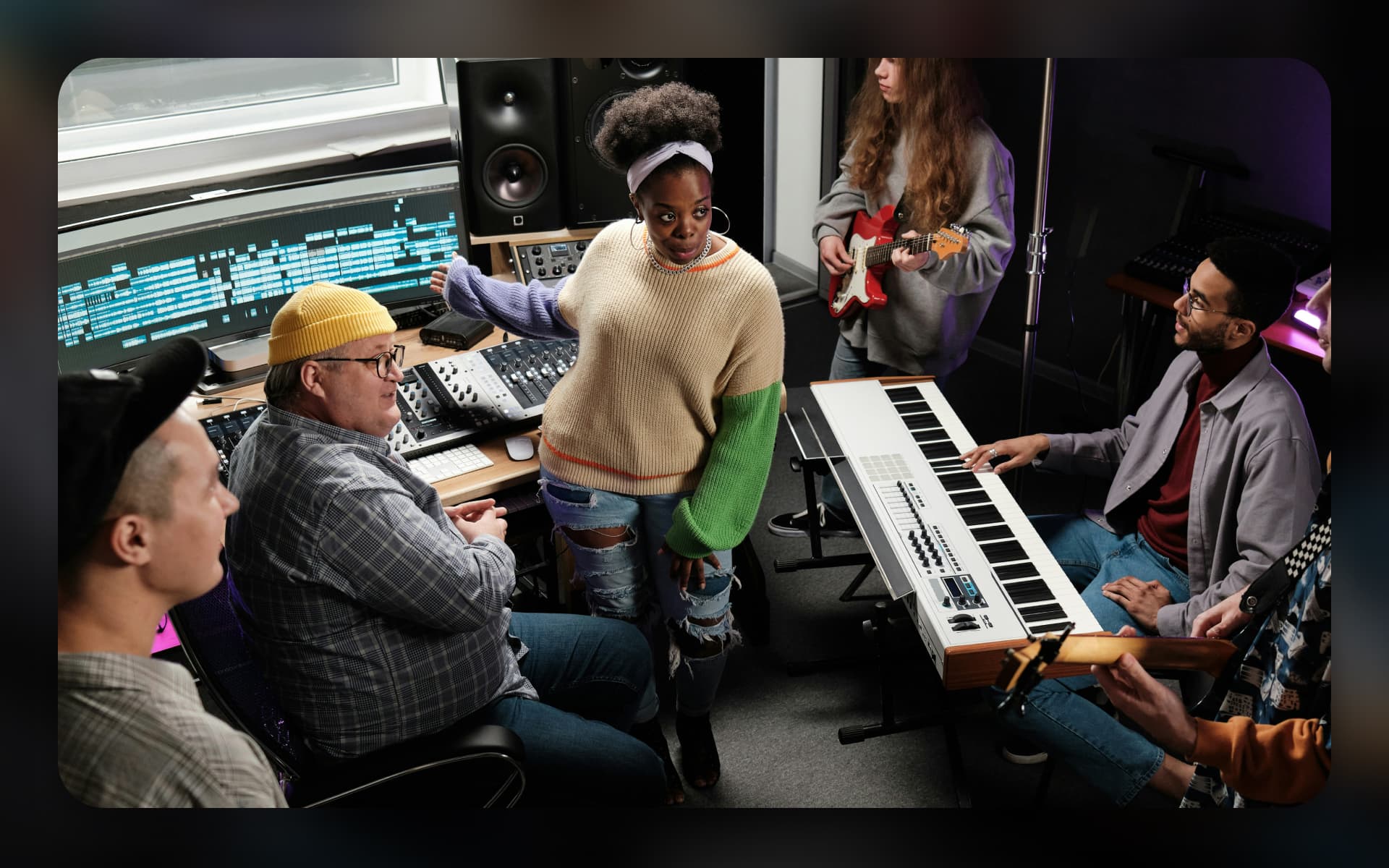
A collaboration is one of the fastest ways for an independent artist to reach new people, and the data backs it up. According to Chartmetric's 2025 Year in Music report, more than half of 2025's charting tracks featured multiple collaborators. Working with the right artist puts your music in front of a whole audience that has never heard you, and it does it in a way a paid ad never could.
Key takeaways
Collaborations grow your audience because you and your partner each bring fans the other does not have. The trick is finding artists at a similar level whose sound genuinely fits yours, then approaching them with something useful instead of a favor to ask. Sort out the practical details, the splits, the credits, and the plan, before you start. A collaboration is a shared audience, not a shortcut, so treat it as a real relationship that benefits both sides.
Why collaborations work
A feature or joint track is powerful because it merges two fanbases for the price of one release, which is why so many of the biggest songs are credited to more than one artist.
You borrow each other's fans
When you collaborate, your partner's listeners hear you in a context they already trust, and yours hear your partner. That mutual introduction is far warmer than a cold ad, because the recommendation is built into the song itself. It is the same borrowed-audience logic behind connecting with the right people, turned into a track.
Two names, more reach
Two artists promoting the same release doubles the people pushing it, the playlists it can reach, and the content around it. A collaboration also tends to feel like an event, which gives both audiences a reason to pay attention in a way a routine solo single often does not.
Finding the right collaborator
The artist you work with matters more than how famous they are, and chasing names far above your level usually leads nowhere.
Look across, not up
The most realistic and useful collaborations are with artists at a similar stage, close enough that the exchange is mutual. Someone a step ahead of you can be reachable and worth approaching, but a superstar has no reason to engage, and a one-sided collaboration rarely happens.
Match sound, not status
A collaboration only works if the two audiences overlap, so the fit of your sounds matters more than the size of the follower count. Pairing with an artist whose listeners would genuinely enjoy your music is what turns a feature into new fans rather than a number that never converts.
A collaboration is a shared audience, not a shortcut.
Making it actually happen
Once you know who fits, how you approach them decides whether it happens at all.
Lead with value
Most artists are flooded with people who want something, so open with what you bring, a strong idea, a part already written, or genuine support for their work. Leading with value rather than a request is what gets a real reply, the same principle that drives building a fanbase and every other relationship in music.
Agree on the details early
Before you record, settle the practical side, who owns what, how royalties and credits are split, and who handles the release. Sorting this out early protects the relationship and keeps a good collaboration from turning into an awkward dispute later.
How Matchfy helps you connect
Finding artists at your level whose sound fits yours is hard when you do not know where to look, and that is where Matchfy comes in. It is an independent platform that connects you with industry professionals and the wider music community around your sound, so the collaborations you build are with people whose audiences actually overlap with yours. Instead of cold messaging strangers, you start from connections that make sense.
FAQ
How do independent artists find people to collaborate with?
Start with artists at a similar stage whose sound fits yours, then reach out with something genuine to offer. Communities and platforms built around your genre make it far easier to find collaborators whose audiences overlap with your own.
What is a feature in music?
A feature is when a guest artist performs on another artist's track and is credited on it, usually shown as "featuring" or "feat." It is one of the most common forms of collaboration, because it introduces each artist to the other's audience.
How do you split royalties on a collaboration?
There is no fixed rule, so the artists agree on the splits before release based on each person's contribution. Settling ownership, credits, and percentages in advance is what keeps a collaboration from becoming a dispute.